

SMC Insurance
Welcome to SMC.
How may I assist you?
by on Saturday, 27 April 2024
| Last Updated on Monday, 08 June 2026


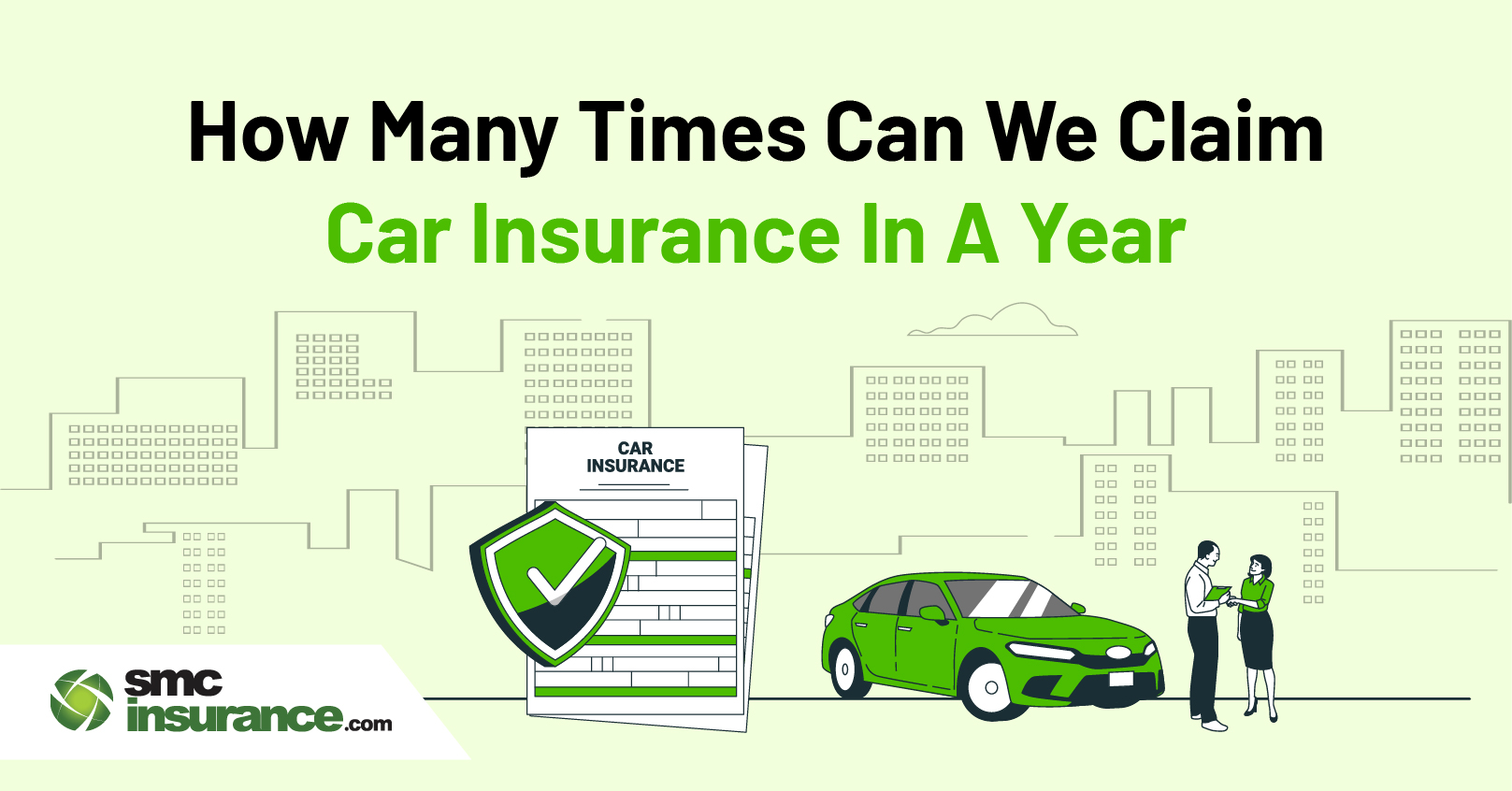
Owning a car in India comes with the responsibility of having car insurance, which acts as a safety net against unexpected mishaps like accidents, theft, or natural disasters. When your vehicle faces damage or loss, the insurance policy steps in to provide compensation through a procedure known as a claim.
But how often can you make a claim within a year under your car insurance policy? Typically, there's no limit to the number of claims you can file in a year with your car insurance policy. However, it's essential to understand that each claim affects your No Claim Bonus (NCB) discount, which you've built up during claim-free years.
Let’s learn more about that!
As discussed earlier, there's no fixed limit on how many times you can claim within a policy year under your car insurance. Yet, making multiple claims can have consequences.
To start, remember that making a claim on your car insurance can mean forfeiting your no-claims bonus. Additionally, frequent claims on your policy could lead to higher premiums during renewal. Insurers may view multiple claims as a higher risk, potentially affecting your ability to secure insurance coverage.
On the other hand, if you've opted for add-ons like zero-depreciation or engine protector, there could be limitations on the number of claims you can make under them . Typically, insurers set a standard limit of 2 claims per policy year for zero-depreciation cover , although some don’t impose any limit.
If your car gets into an accident, it makes sense to claim your policy for the damages. Yet, it's wise to limit claims to significant or serious damages.
It is crucial to understand that filing a claim for every small scratch or dent is not advisable. For instance, paying for fixing a bumper dent or a broken mirror yourself might be a good idea instead of filing a car insurance claim.
It's clear now that there are no specific limitations on the number of claims allowed under a car insurance policy within a year. However, making multiple claims annually can come with specific drawbacks. Let’s look at them below -
|
Claim-Free Years |
NCB Discount on OD Premium |
|
1 Year |
20% |
|
2 Years |
25% |
|
3 Years |
35% |
|
4 Years |
45% |
|
5 Years |
50% |
Note: Even one own-damage claim resets your NCB to 0%. At renewal, you lose all accumulated discounts.
Car insurance offers financial protection in case of mishaps, sparing you from bearing the entire cost yourself. But the big question is, should you raise a claim for every little car damage? In all honesty, there's no definitive rule when it comes to making insurance claims. Instead, following a simple process can guide you in making the right decisions.
Let’s say your car sustains a minor dent on its bumper and the repair cost comes to around 1500/-. In this case, it's often best not to file a claim. This is because each time you file a claim, you'll need to pay a compulsory deductible. If your vehicle is below 1500CC, your compulsory deductible might be 1000/-. This means you'll only receive Rs 500 from the insurance company and you may have to pay Rs 1000 out of your own pocket.
So, if you proceed with this claim, you risk losing any No Claim Bonus (NCB) you've accumulated. Plus, you'll end up spending more from your own pocket than the insurance company. Therefore, it's best to avoid filing a claim if you'll be paying more than what the insurance company would reimburse.
Note - The example provided does not include consumable charges and other additional expenses for better understanding.
Here are some situations where making a claim makes sense:
In conclusion, while there's no set limit on the number of claims you can make under your car insurance policy in India, it's crucial to consider the implications of frequent claims. Each claim affects your No Claim Bonus and could result in higher premiums during renewal. Ultimately, it's about striking a balance and being prudent about when to file a claim. By making informed decisions, you can ensure that your car insurance serves its purpose effectively while minimising unnecessary expenses.
Disclaimer:The information provided on this platform is intended for general awareness and educational purposes. While every effort is made to ensure accuracy, some details may change with policy updates, regulatory revisions, or insurer-specific modifications. Readers should verify current terms and conditions directly with relevant insurers or through professional consultation before making any decision.
All views and analyses presented are based on publicly available data, internal research, and other sources considered reliable at the time of writing. These do not constitute professional advice, recommendations, or guarantees of any product’s performance. Readers are encouraged to assess the information independently and seek qualified guidance suited to their individual requirements. Customers are advised to review official sales brochures, policy documents, and disclosures before proceeding with any purchase or commitment.
No. Generally, your car insurance policy won't be cancelled due to multiple claims. However, you can expect a possible premium hike during renewal as a result.
If your car sustains a minor dent, it's wise not to file a claim. This is because, in the event of a claim, you may have to pay the compulsory deductible , which could be Rs 1000 for vehicles below 1500CC. Moreover, filing such a claim risks losing your No Claim Bonus (NCB) and ends up costing you more than the insurance reimbursement.
Industry experts affirm that there are no restrictions on the number of claims you can make within a year under your car insurance policy. So, if your vehicle faces frequent damage from accidents, you're typically free to file as many claims as necessary.
When it comes to claims, there is no set limit but making multiple claims could lead to a premium increase during policy renewal by your insurer. Also, you risk losing any accumulated no-claim bonus.
No, as per IRDAI guidelines, there is no legal cap on the number of claims you can file in a year under your car insurance policy. However, frequent claims, especially for minor damages, can result in loss of No Claim Bonus (NCB), premium hikes at renewal, and in extreme cases, policy non-renewal by your insurer.
No, third-party claims (covering injury, death, or property damage to a third party) do NOT affect your No Claim Bonus. Only own-damage claims (where you seek compensation for your own vehicle's damage) reset your NCB to zero. This is an important distinction most policyholders are unaware of.
An NCB Protection Add-on allows you to make 1-2 own-damage claims per policy year without your accumulated No Claim Bonus being reset. If you have built up a 40-50% NCB discount over the years, this add-on protects that significant savings. It is highly recommended for drivers with 3+ claim-free years.
Most insurers allow a maximum of 2 zero-depreciation (zero-dep) claims per policy year. The exact limit varies by insurer and policy document, so always check your policy schedule before filing a zero-dep claim.
Your insurer cannot cancel your active policy mid-term for multiple claims. However, they have the right to decline renewal when your policy expires. A history of frequent claims signals high risk. In such cases, you may need to switch insurers, often at a higher premium.
Generally, no. If repair costs are Rs. 1,500-3,000 and your NCB is worth Rs. 5,000-10,000 in premium savings, it makes no financial sense to file a claim. The rule of thumb: File a claim only when repair costs significantly exceed your deductible plus the NCB discount you stand to lose.


SMC Insurance Brokers Pvt. Ltd.
SMC Metro Mall, Near Pratap Nagar Metro Station, Pratap Nagar, New Delhi-110007
Registration No: 289, Registration Code No: IRDAI/DB-272/04/289, Valid till: 27/01/2029, License category: Composite Broker, CIN: U66000DL1995PTC172311
Insurance is the subject matter of solicitation.
Visitors are hereby informed that their information submitted on the website may be shared with insurers.
Product information is authentic and solely based on the information received from the Insurer.
