Air pollution is a pressing concern that each one of us has to act upon immediately. Per IEA's India Energy Outlook and transport sector data, road vehicles contribute approximately 10–12% of India's total energy-related CO2 emissions. If we don't do something soon, this number could double by 2050 because more people are using their own vehicles or transporting goods.
This pollution is not just bad for nature; it is also really bad for our health.
To combat this challenge, India needs to take action to reduce vehicle pollution. In this article, we will talk about different things we can do to make our vehicles pollute less and make the air cleaner and safer for everyone. By working together and making smart choices, we can make sure we have a healthier environment to live in.
How To Reduce Vehicle Pollution In India?
First, it is important to note that from April 2020, India mandated BS6 emission norms for all new vehicles. It is the cleanest standard yet, equivalent to Euro 6. BS6 vehicles emit up to 80% less particulate matter than their BS4 predecessors and are significantly lower in nitrogen oxide (NOx) emissions. If you own a pre-BS6 vehicle, regular PUC checks and timely servicing are especially important. To tackle vehicle pollution in India,
there are many simple yet effective key steps that you can take –
- Choose Eco-Friendly Fuels
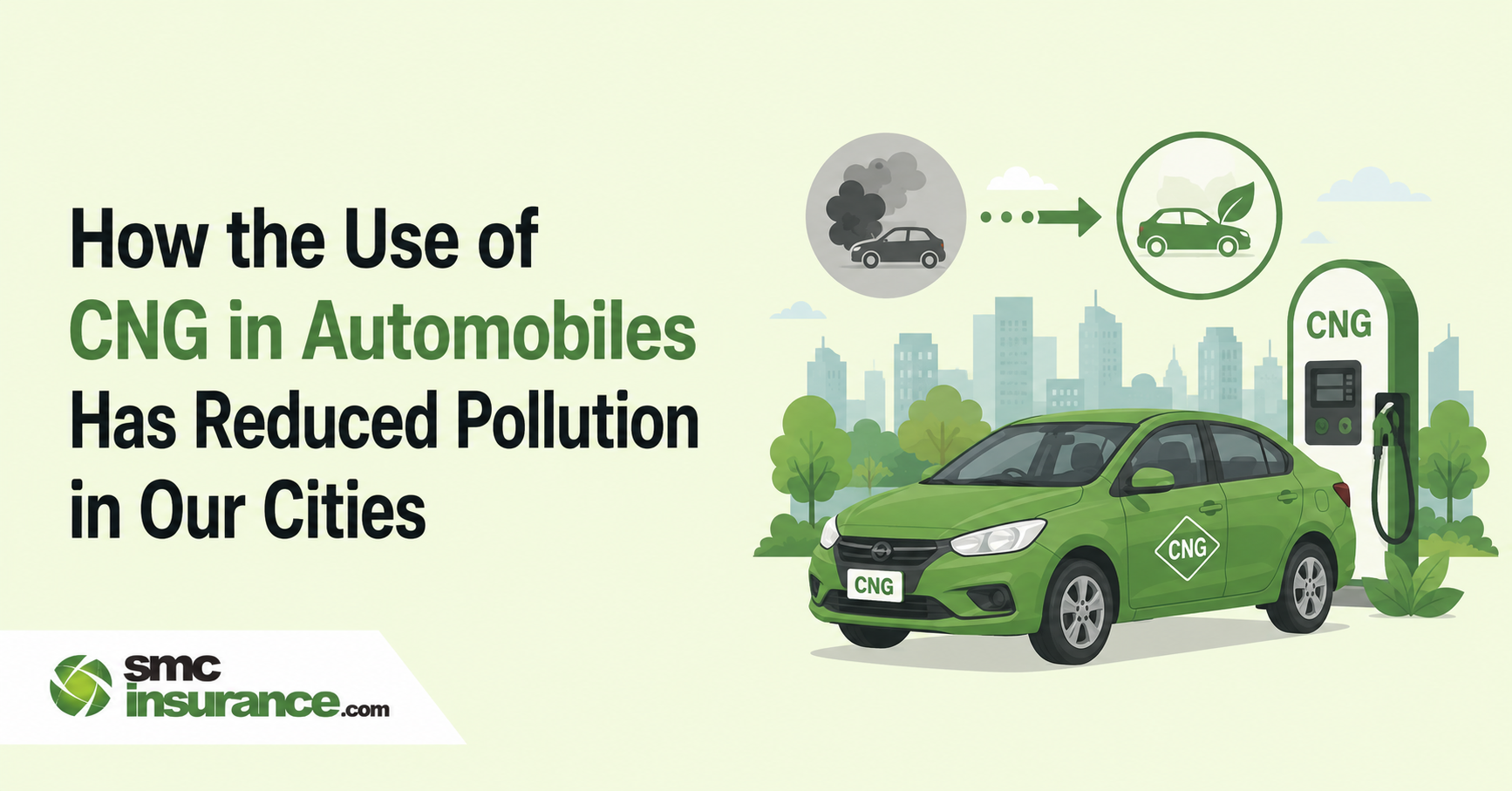
You can start by using fuels that are kinder to the environment. Fuels like CNG emit fewer harmful gases compared to petrol and diesel. India registered approximately 19.4 lakh (1.94 million) new EV units in 2024–25, a sign that EV adoption is accelerating on Indian roads. Another option is electric vehicles,
which do not emit any harmful gases at all.
India's BS6 Emission Norms: The Regulatory Backbone: India transitioned to Bharat Stage VI (BS6) emission norms in April 2020, the strictest standard ever mandated for vehicles in India. These norms, developed in consultation with MoRTH and aligned with Euro 6 standards, dramatically reduce the amount of particulate matter (PM2.5) and nitrogen oxides (NOx) that vehicles emit. All new petrol, diesel, and CNG vehicles sold in India from April 2020 are BS6-compliant. If you drive an older BS4 or BS3 vehicle, regular PUC
certification and engine servicing become even more critical to keep emissions in check.
- Get A Pollution Under Control Certificate (PUC)
As a vehicle owner, it is your duty to obtain a Pollution Under Control (PUC) certificate. This certificate helps you monitor if your vehicle's emissions are within acceptable limits. If not, it is best to get your vehicle checked or consider replacing it.
- Keep Your Vehicle Well-Maintained
Dirt and dust buildup in your vehicle can lead to increased emissions. Regular maintenance ensures that worn-out parts are fixed or replaced, reducing harmful emissions. You should, thus, make it a habit to maintain your vehicle throughout the year to keep it running smoothly and minimise pollution.
- Turn Off The Engine When Idle
Leaving your engine running while waiting at traffic signals wastes fuel and emits harmful gases. Switching off the engine during such idle times conserves fuel and helps the environment. Along with eco-friendly practices like carpooling, turning off the engine at stops like red lights makes a significant difference in saving energy and reducing pollution.
- Drive Smartly
Reduce your vehicle usage whenever possible and opt for carpooling or shared rides to reduce the number of vehicles on the road. Follow your manufacturer's maintenance schedule and use recommended oil to minimise harmful emissions from your vehicle.
- Regular Oil Changes
Oil is crucial for your vehicle's smooth operation and efficient engine function. Regular usage can lead to dust buildup in the engine, potentially causing malfunctions. Changing the oil at recommended intervals ensures your vehicle runs smoothly and reduces pollution by keeping the engine clean and functioning properly.
- Keep Tire Pressure In Check
Ensuring your tires are properly inflated improves fuel efficiency, which means your vehicle burns less fuel and emits fewer pollutants into the air.
- Maintain A Steady Speed
Driving at a consistent speed helps to cut down pollution by enhancing fuel efficiency and reducing harmful emissions. When your vehicle maintains a steady pace, the engine operates more efficiently, burning less fuel and emitting fewer pollutants like carbon dioxide (CO2), nitrogen oxides (NOx), and particulate matter (PM). This also minimises wear and tear of your vehicle, resulting in lower emissions in the long run.
- Consider Switching to an Electric Vehicle (EV)
India's EV ecosystem has grown rapidly. With over 19 lakh EVs registered in 2024–25 (VAHAN data, MoRTH) and government incentives under the PM E-DRIVE scheme, an electric vehicle eliminates direct tailpipe emissions entirely. Pair this with
renewable energy charging for the most eco-friendly commute
Note: For BS6-compliant vehicles (all vehicles sold from April 2020 onwards), a PUC certificate is valid for 1 year. For older, pre-BS6 vehicles, it is valid for 6 months. Driving without a valid PUC certificate can attract a fine of Rs. 10,000 and/or
imprisonment up to 6 months for a second offence under the Motor Vehicles Act.
Other Significant Ways to reduce Air pollution caused by Vehicles
Here are a few other ways to reduce vehicle-related air pollution –
- Drive Responsibly
Avoid sudden acceleration and heavy braking, as these actions can increase fuel consumption and emissions. Instead, you can maintain a steady speed and anticipate traffic to drive more smoothly and efficiently.
- Optimise Your Routes
Make use of navigation apps to find the most efficient routes with less traffic and fewer stops, reducing emissions. You could also combine errands into one trip to minimise driving time and distance.
- Embrace Alternative Transportation
By supporting public transportation, carpooling, walking, or biking whenever possible, you will be able to decrease the number of vehicles on the road and reduce pollution.
- Manage Air Conditioning Usage
Running your air conditioner puts extra strain on your vehicle's engine and increases fuel consumption. Hence, you should use it economically and try to park in shaded areas to minimise the need for cooling, thereby saving fuel and reducing emissions.
Does an Expired PUC Affect Your Insurance Claim?
A common question is whether driving with an expired PUC certificate can result in an insurance claim being rejected. In most accident cases, Indian courts have held that an expired PUC alone (when unrelated to the cause of the accident) cannot be used to deny a claim. However, insurers may raise it as a dispute factor and it is always advisable to maintain a
valid PUC certificate not just for legal compliance, but to avoid any complications at the claims stage.
To conclude,
Reducing vehicle pollution is crucial for our environment and health.
By following simple steps like maintaining your vehicle properly, driving responsibly, and using alternative transportation when possible,
we can all make a positive impact. Small changes, such as keeping tires inflated and avoiding unnecessary idling, can add up to significant
reductions in pollution. Let's work together to protect our planet and create cleaner air for everyone to breathe.
Disclaimer:The information provided on this platform is intended for general awareness and educational purposes. While every effort is made to ensure accuracy, some details may change with policy updates, regulatory revisions, or insurer-specific modifications. Readers should verify current terms and conditions directly with relevant insurers or through professional consultation before making any decision.
All views and analyses presented are based on publicly available data, internal research, and other sources considered reliable at the time of writing. These do not constitute professional advice, recommendations, or guarantees of any product’s performance. Readers are encouraged to assess the information independently and seek qualified guidance suited to their individual requirements. Customers are advised to review official sales brochures, policy documents, and disclosures before proceeding with any purchase or commitment.
FAQs
Here are some simple ways to reduce pollution from vehicles –
- Get a Pollution Under Control (PUC) Certificate.
- Use alternate fuels whenever possible.
- Keep your car well-maintained.
- Turn off the engine when you are not using it.
- Drive at a steady speed.
- Avoid driving during peak traffic hours.
Here are ten easy ways to reduce pollution –
- Keep your vehicle in good condition.
- Check your tire pressure regularly.
- Drive wisely to save fuel.
- Combine errands to reduce trips.
- Use public transportation when you can.
- Pick a car that uses fuel efficiently.
- Avoid idling your engine unnecessarily.
- Use air conditioning sparingly.
- Plan your routes efficiently to minimise driving.
- Support policies that promote cleaner transportation options.
Vehicle pollution happens mainly because cars burn fossil fuels. When this happens, harmful stuff goes into the air. Here's what gets released –
- Carbon Monoxide (CO) – when fuel does not burn fully.
- Hydrocarbons (HC) – these come from fuel that does not burn and evaporates emissions.
- Nitrogen Oxides (NOx) – formed when nitrogen and oxygen mix at high heat.
- Particulate Matter (PM) – tiny particles of soot and metal bits from the exhaust.
- Volatile Organic Compounds (VOCs) – from fuel and car emissions that cause smog.
Here's how to cut down on your car emissions –
- Keep your car in good shape with regular check-ups.
- Keep your tires filled up right.
- Drive smoothly without sudden speeding up or hard braking.
- Use good-quality fuel.
- Share rides or use public transport.
- Think about getting a cleaner car.
- Do not let your car idle for too long.
- Use air conditioning only when you really need it.
Bharat Stage VI (BS6) norms, mandatory for all new vehicles from April 2020, set strict limits on particulate matter and nitrogen oxides. All new vehicles sold in India must comply. BS6 vehicles
emit up to 80% less PM than older BS4 vehicles, making them significantly less polluting.
Under the Motor Vehicles (Amendment) Act 2019, driving without a valid PUC certificate can attract a fine of up to Rs. 10,000 and/or imprisonment up to
6 months for a second offence. First-time offenders may face lower penalties varying by state.
For BS6-compliant vehicles (sold from April 2020), a PUC certificate is valid for 1 year. For older vehicles (pre-BS6),
validity is typically 6 months. Always check the validity date printed on your PUC certificate.
Yes, in cities like Delhi, Mumbai and Bengaluru, where traffic congestion causes significant idling emissions, carpooling reduces the total number of vehicles on the road for the same number of commuters. Delhi's odd-even scheme
demonstrated that even temporary reductions in vehicle numbers can meaningfully cut PM2.5 levels.